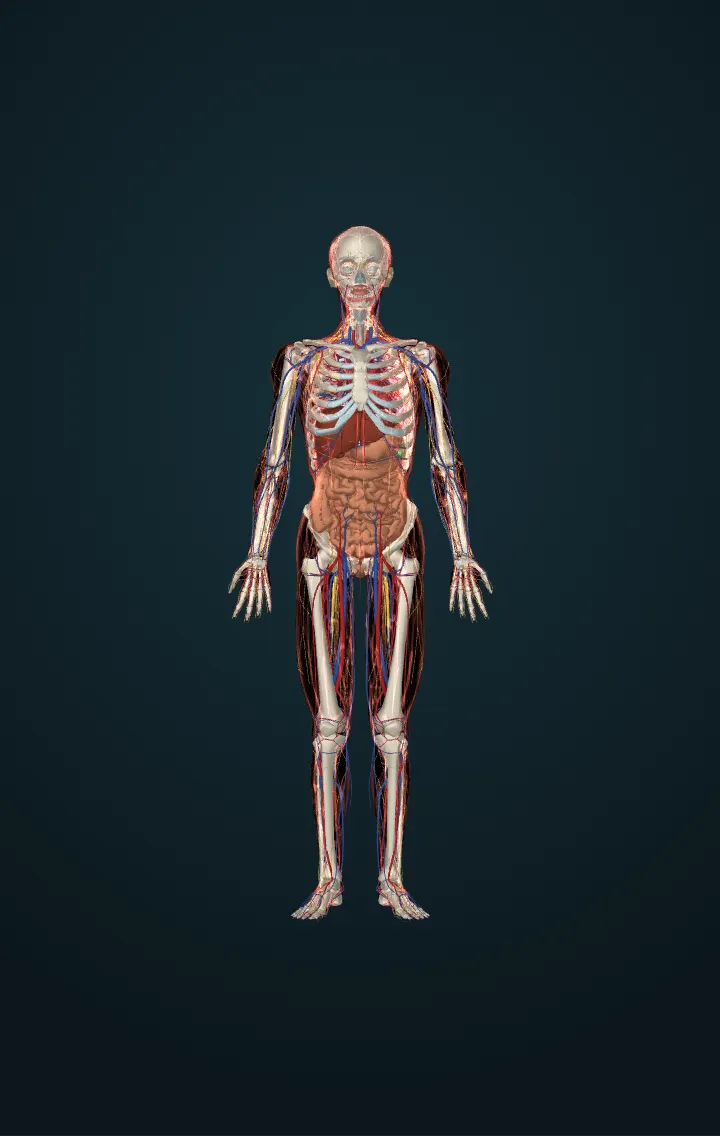
Male reproductive organs
The testes, the ducts and glands, and the penis: the organs that make sperm and the hormone testosterone, and carry sperm out of the body.
The male reproductive organs make sperm, the male sex cells, and the hormone testosterone, and carry sperm out of the body. They are the two testes, held in the scrotum outside the body cavity; a chain of ducts — the epididymis, the ductus deferens (vas deferens), the ejaculatory duct and the urethra; the glands that add the fluid which makes up most of semen — the seminal vesicles, the prostate and the bulbourethral glands; and the penis.
The testes hang in the scrotum, a pouch of skin and muscle that keeps them a few degrees cooler than the inside of the body, as sperm need. Inside each testis, tightly coiled seminiferous tubules make sperm, from puberty on and through the rest of life; between the tubules, the interstitial (Leydig) cells make testosterone, which shapes the body's male traits at puberty and keeps sperm being made.
Newly made sperm move into the epididymis, a tightly coiled tube on the back of each testis, where they mature and are stored. From it, the ductus deferens climbs out of the scrotum through the inguinal canal into the pelvis, passes over the ureter and behind the bladder, and joins the duct of the seminal vesicle to form the ejaculatory duct, which runs through the prostate into the urethra.
The seminal vesicles add a fluid rich in fructose, the sperm's fuel; the prostate, a gland about the size of a walnut just below the bladder, around the urethra, adds a milky fluid; the small bulbourethral glands, not drawn in this model, add a little clear mucus. The penis carries the urethra out of the body. Its shaft holds three columns of erectile tissue — the two corpora cavernosa above and the corpus spongiosum below, around the urethra, which widens at the tip into the glans. When its arteries widen and this tissue fills with blood, the penis becomes erect.
Numbers
| Length of a testis, adult | about 4–5 cm | OpenStax, Anatomy and Physiology (1st ed., CC BY-NC-SA 4.0: linked, never copied) — 27.1 Anatomy and Physiology of the Male Reproductive System |
|---|---|---|
| Length of the epididymis, uncoiled | about 6 m | OpenStax, Anatomy and Physiology (1st ed., CC BY-NC-SA 4.0: linked, never copied) — 27.1 Anatomy and Physiology of the Male Reproductive System |
| Share of semen from the seminal vesicles | about 60 percent | OpenStax, Anatomy and Physiology (1st ed., CC BY-NC-SA 4.0: linked, never copied) — 27.1 Anatomy and Physiology of the Male Reproductive System |
Its parts in the model
- Corpus cavernosum of penis
- Corpus spongiosum of penis
- Deep dorsal vein of penis
- Glans penis
- Left deferent duct
- Left dorsal artery of penis
- Left epididymis
- Left seminal vesicle
- Left superficial dorsal vein of penis
- Left testis
- Prostate
- Right deferent duct
- Right dorsal artery of penis
- Right epididymis
- Right seminal vesicle
- Right superficial dorsal vein of penis
- Right testis
- Skin of external genitalia
- Superficial dorsal vein of penis
Sources
- OpenStax, Anatomy and Physiology (1st ed., CC BY-NC-SA 4.0: linked, never copied) — 27.1 Anatomy and Physiology of the Male Reproductive System
- MedlinePlus — Male Reproductive System
- BodyParts3D, © The Database Center for Life Science, CC BY-SA 2.1 Japan — adapted.