Stage 1
Count the dots
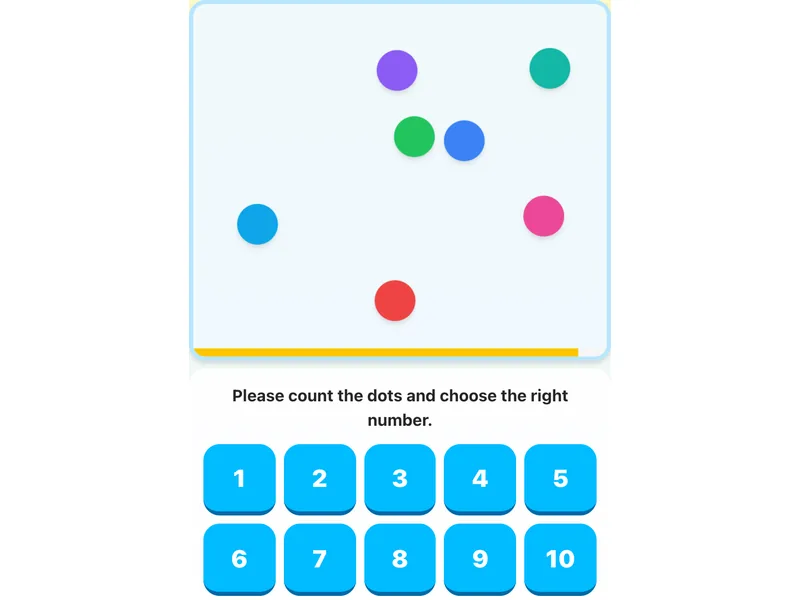
Between one and ten colored dots appear on the board. Your child counts them and taps the matching number on the 1 to 10 pad, within 20 seconds. It practices one-to-one counting, the first step in early math.
Count the dots, listen for the number, fill the dots — three little games for little players. Every right answer is a star.
A run on your own, right away
Practice on your own · pick the language and rounds · every star is yours ·
Or play another way
No account needed — you play as a guest.
Playing as a guest, you accept the Terms of Service, including that gameplay data is recorded and may be used to train AI models.
A match plays these 3 stages in order, each over a block of rounds. Everyone at the table plays the same round at the same time, and every right answer earns a star.
Stage 1
Between one and ten colored dots appear on the board. Your child counts them and taps the matching number on the 1 to 10 pad, within 20 seconds. It practices one-to-one counting, the first step in early math.
Stage 2
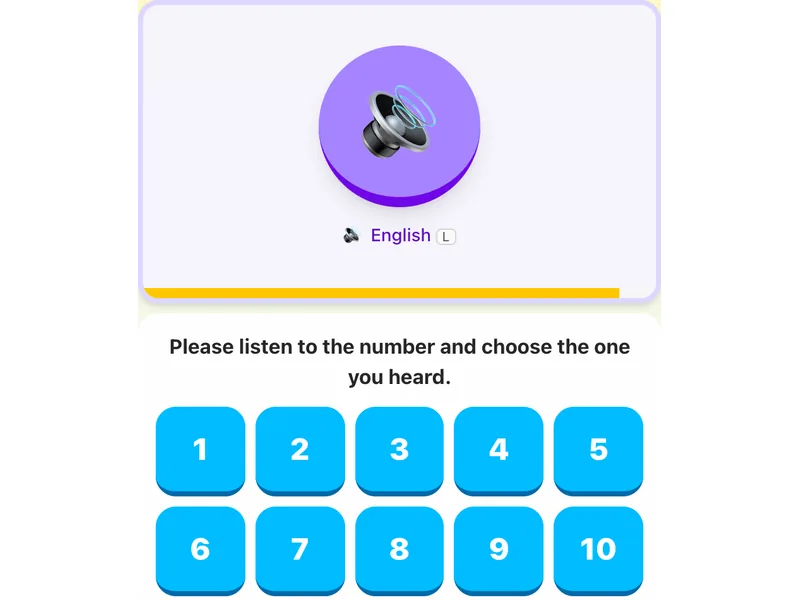
A voice says a number from one to ten and your child taps it on the pad. The speaker button plays it again as often as needed. It links the spoken word to the written numeral, in any of eight languages.
Stage 3
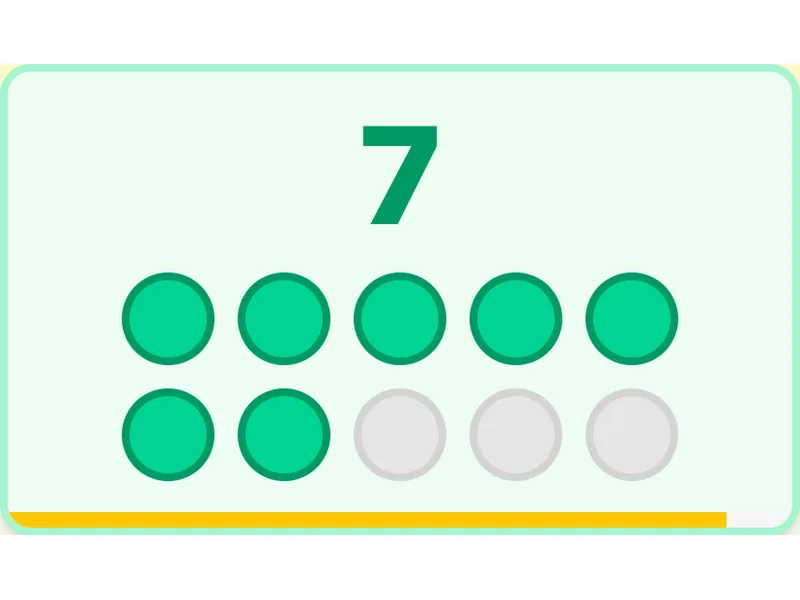
A number appears above ten gray dots. Your child taps dots to turn exactly that many green, then taps Done. It turns a numeral back into a quantity: counting the other way round.
No open seats right now — start a table above.
Nothing being played right now.
Three tiny games about numbers one to ten — counting, listening and filling — built for small hands: big buttons, bright dots, a cheer for every right answer, and gentle 'next time' for a miss.
Free to play with no sign-up: start as a guest, or create a free account to keep your games, rating and friends.
🛡️ Provably fair: every match commits to a random seed before the first roll and reveals it at the end, so every die can be re-derived and checked in your own browser.
Counting objects one by one, and knowing that the last number said is how many there are.
Linking the spoken number, the written numeral and the amount it stands for.
Turning a numeral back into an amount: making seven by filling seven dots.
Listening carefully and answering in a short time, in any of eight languages.
Looking for another game? Pick one here.
Every text is drawn from a committed fair seed — how our fairness proofs work.
We use Microsoft Clarity to see how the site is used, with session replays. Everything else here is needed to play. Details